

Loamy soil is often hailed as the gardener's dream soil type, and rightfully so. Comprising a balanced mixture of sand, silt, and clay, it offers good drainage while retaining enough moisture and nutrients to support a wide variety of plants. As an aluminium garden tools supplier, I'm frequently asked about how our products interact with loamy soil. In this post, I'll delve into the science behind how different aluminium garden tools work effectively with loamy soil and why they are a great choice for gardeners.
The Advantages of Aluminium in Garden Tools
Before we explore how these tools handle loamy soil, let's first understand the benefits of using aluminium. Aluminium is lightweight, which means less fatigue during gardening sessions. Despite its lightness, it is also highly durable and resistant to corrosion. This is especially important when tools are constantly exposed to soil, water, and various weather conditions. Moreover, aluminium is an excellent conductor of heat, which makes it less likely to become too cold or hot to hold during different seasons.
Aluminium Garden Weeder and Loamy Soil
The Aluminium Garden Weeder is a versatile tool designed to remove weeds from your garden beds. In loamy soil, the weeder shines because of its ability to penetrate the soil easily. The balanced texture of loamy soil does not pose much resistance to the sharp tip of the weeder. Unlike in sandy soil where the soil might be too loose and the weeder could easily slip around the weed roots, or in clay soil where the soil is often too compact and the weeder may struggle to penetrate, loamy soil offers just the right amount of resistance.

When using the aluminium garden weeder, you can insert it close to the base of the weed and gently lever it to uproot the weed along with its roots. The smooth surface of the aluminium prevents the soil from sticking to the tool, which is a significant advantage as it saves time on cleaning. Additionally, the durability of aluminium ensures that the weeder can withstand repeated use in the loamy soil without getting bent or damaged.
Aluminium Hand Fork: Cultivating Loamy Soil
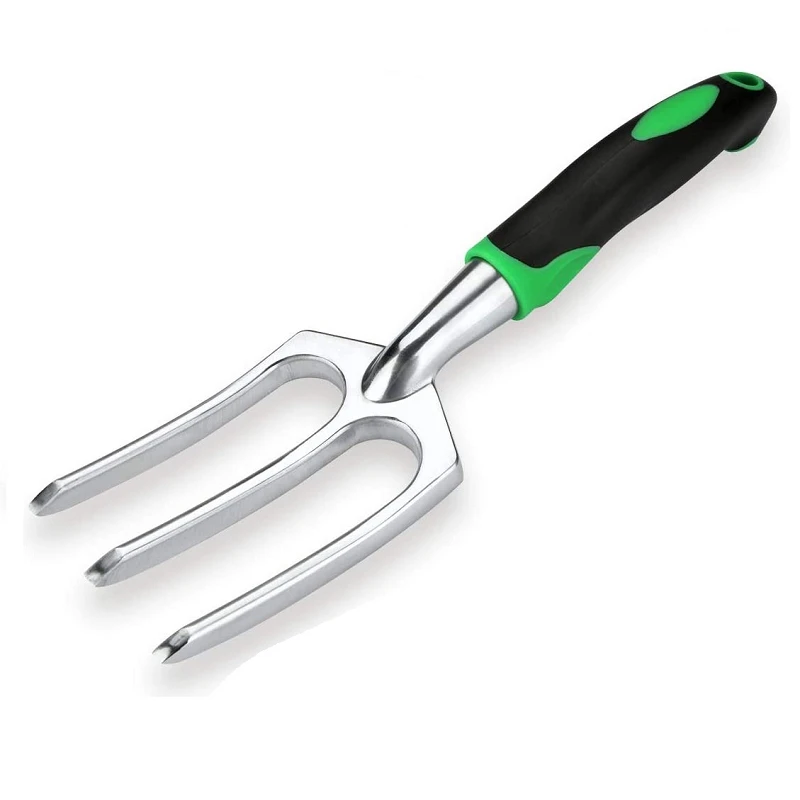
The Aluminium Hand Fork is a must - have tool for any gardener working with loamy soil. Its primary function is to cultivate the soil, break up clumps, and aerate the top layer. Loamy soil, although well - structured, can still form clumps over time, especially after heavy rainfall or when it has been compacted by foot traffic.
The tines of the aluminium hand fork are designed to penetrate the loamy soil easily. The lightweight nature of aluminium allows for precise control, enabling you to work around delicate plants without causing damage. As you insert the hand fork into the soil and gently turn it, the soil breaks up into smaller, more manageable pieces. This process not only improves the soil structure but also enhances air circulation and water infiltration. The aerated soil provides a better environment for plant roots to grow, as they can access oxygen, water, and nutrients more easily.
Moreover, the aluminium hand fork is useful for incorporating organic matter into the loamy soil. Whether you are adding compost, manure, or other soil amendments, the hand fork can mix these materials evenly throughout the soil. The smooth surface of the aluminium tines ensures that the soil and organic matter do not stick, allowing for efficient and clean operation.
Aluminium Hand Rake: Leveling and Cleaning in Loamy Soil
The Aluminium Hand Rake has multiple functions in a garden with loamy soil. One of its main uses is to level the soil surface after cultivating or planting. Loamy soil can have an uneven surface due to the activities of planting, weeding, or the natural settling of the soil. The hand rake can be used to smooth out these irregularities, creating a flat and even surface for sowing seeds or laying turf.
The teeth of the aluminium hand rake are flexible enough to gently move the loamy soil without disturbing the underlying structure too much. They can also be used to remove debris, such as leaves, twigs, and small stones from the soil surface. The lightweight design of the rake makes it easy to maneuver, and the corrosion - resistant aluminium ensures a long lifespan.
In addition, the hand rake is useful for raking in fertilizers or mulches. When applying a thin layer of fertilizer or mulch to the loamy soil, the rake can help distribute the material evenly across the surface. This ensures that all plants in the area receive an equal amount of nutrients or protection.
The Science of Soil - Tool Interaction in Loamy Soil
The interaction between aluminium garden tools and loamy soil is based on several scientific principles. The physical properties of loamy soil, such as its particle size distribution, porosity, and water - holding capacity, play a crucial role. The balanced mixture of sand, silt, and clay in loamy soil gives it a moderate bulk density, which means it is neither too dense nor too loose.
The aluminium tools, with their smooth surfaces and appropriate shapes, can take advantage of these soil properties. For example, the low friction coefficient of aluminium reduces the force required to insert the tool into the soil. The porosity of loamy soil allows air and water to move through it easily, which is beneficial for plant growth and also makes it easier for the tools to penetrate and manipulate the soil.
Maintenance of Aluminium Garden Tools for Loamy Soil Use
To ensure the long - term performance of your aluminium garden tools when working with loamy soil, proper maintenance is essential. After each use, it is recommended to clean the tools thoroughly to remove any soil residue. You can use a garden hose or a bucket of water and a brush to clean the tools. Make sure to dry them completely to prevent any potential rusting, although aluminium is highly corrosion - resistant.
If the tools have become dull over time, you can sharpen them using appropriate sharpening tools. For the weeder, a fine - grit sharpening stone can be used to maintain its sharp edge. For the hand fork and rake, you can check the tines and straighten them if they have become bent.
Why Choose Our Aluminium Garden Tools for Loamy Soil
As a leading supplier of aluminium garden tools, we take pride in offering high - quality products that are specifically designed to work well with loamy soil. Our tools are crafted with precision, ensuring the right balance between strength and lightness. We use only the finest grade of aluminium, which guarantees durability and resistance to corrosion.
Our team of experts has extensive knowledge of gardening and soil science, and we have designed our tools to meet the specific needs of gardeners working with loamy soil. Whether you are a professional landscaper or a home gardener, our aluminium garden tools will make your gardening tasks easier, more efficient, and more enjoyable.
Contact Us for Your Aluminium Garden Tool Needs
If you are interested in purchasing our aluminium garden tools for your loamy soil garden, we invite you to contact us for a detailed discussion. Our sales team is ready to answer all your questions, provide product information, and assist you in choosing the right tools for your specific requirements. We offer competitive prices, reliable shipping, and excellent customer service. Let us help you take your gardening experience to the next level with our top - quality aluminium garden tools.
References
- Brady, N. C., & Weil, R. R. (2008). The Nature and Properties of Soils. Pearson Prentice Hall.
- Hartmann, H. T., Kester, D. E., Davies, F. T., & Geneve, R. L. (2010). Plant Propagation: Principles and Practices. Prentice Hall.