


Other Garden Tools Kit and Accessaries
Your Professional Other Garden Tools Kit and Accessaries Supplier
YOUTH GARDENPRO was established from 2013 for domestic business, specialized in manufacturing and trading comprehensive ranges of garden hand tools, kids gardening tools, bonsai tools kit and other gardening related products. In 2022, we have worked with clients from 32 countries and areas all over the world, covering retailers, E-commerce and traditional distributors, reached a total revenue of over 5 million USD.YOUTH GARDENPRO is a very professional manufacturer in garden hand tools field, support OEM/ODM with low MOQ. We could offer you high quality product and excellent service with our senior experienced sales team.

why choose us
Production Equipment
YOUTH GARDENPRO have the production line of 4 forging equipment, 4 stamping machine, 4 welding equipment, 2 coating line, 6 polish machine and 3 assembly line.
Production Market
We have worked with clients from 32 countries and areas all over the world, covering retailers, super market, E-commerce and traditional distributors, reached a total revenue of over 5 million USD.
Accept ODM/OEM Service
We wholeheartedly accept the ODM/OEM service. The OEM/ODM option with your own brand is accessible even with a low Minimum Order Quantity (MOQ).
Product Application
Our products find wide applications in various fields. Home & Garden, Plant, Gift, Wholesaler, Distributor, E-commerce, Super Market, Flower, Bonsai.
Advantages of Plastic Handle Pruner
Lightweight and Easy to Handle
Small gardens typically require a lot of precision work, such as trimming delicate plants, deadheading flowers, and shaping small shrubs. Plastic handle pruners are significantly lighter compared to their metal - handled counterparts. This lightness makes them easy to maneuver, reducing hand fatigue during long periods of use.
Cost - Effective
Budget is often a concern for small garden owners, especially those who are just starting out. Plastic handle pruners are generally more affordable than pruners with other types of handles, such as wooden or ergonomic rubber - coated handles. This cost - effectiveness allows you to purchase a good - quality pruning tool without breaking the bank.


Resistance to Rust and Corrosion
Small gardens are often exposed to various weather conditions, including rain, humidity, and occasional splashes from watering. Metal - handled pruners are prone to rust and corrosion over time, which can not only damage the tool but also affect its performance. Plastic handles, on the other hand, are highly resistant to rust and corrosion.
Comfortable Grip
Most plastic handle pruners are designed with ergonomics in mind. The smooth surface of the plastic provides a comfortable grip, reducing the pressure on your hands and fingers. Some models even feature textured or contoured plastic handles that fit perfectly into the palm of your hand, enhancing control and precision while pruning.
Specification
|
Item |
Value |
|
Warranty |
3 years |
|
Handle Material |
Plastic |
|
Place of Origin |
China |
|
Pruner Type |
Anvil |
|
Material |
Steel |
|
Finishing |
Not Coated |
|
Feature |
Anti-Slip Grip |
Types of Plastic Handle Pruner
Long Handled Loppers
To prune large plants with thick branches, a long-handled lopper is the ideal hand pruning tool. Different blade types are available for heavy duty loppers. The most commonly used blade types for loppers are bypass and anvil blades. Bypass blades produce clean cuts on living branches and their action is comparable to scissors.
Hedge Pruning Shears
Hedge shears are both lightweight and durable to reduce strain on arms and make trimming easier. Some models feature a non-stick plating over steel blades to keep them honed and rust-free for easier cuts. Hedge shears can cut branches up to a half-inch in diameter. Some models, however, feature limb notches to extend this dimension.
Hand Pruning Saws
A pruning saw is a tool with the same sharp teeth as saws used for cutting lumber. Pruning saws, though, are intended for trimming live shrubs and trees. There are many types of pruning saws in different sizes and shapes, featuring hard-point, heat-treated teeth each intended for a particular type of branch or stem.
Compound Pole Pruning Saws
Compound pruners incorporate a saw mounted on a telescopic aluminum alloy or fiberglass pole and a pruner blade in one cutting head. The advantage of a compound pruner is that the tool is immediately available to switch from pruning to sawing.
How To Use Plastic Handle Pruner Shears
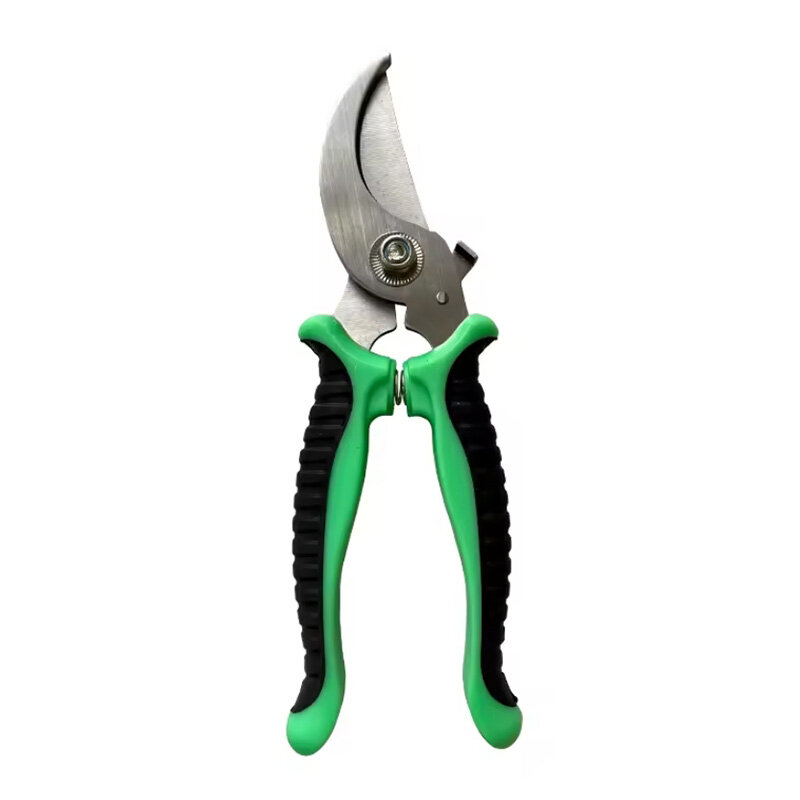
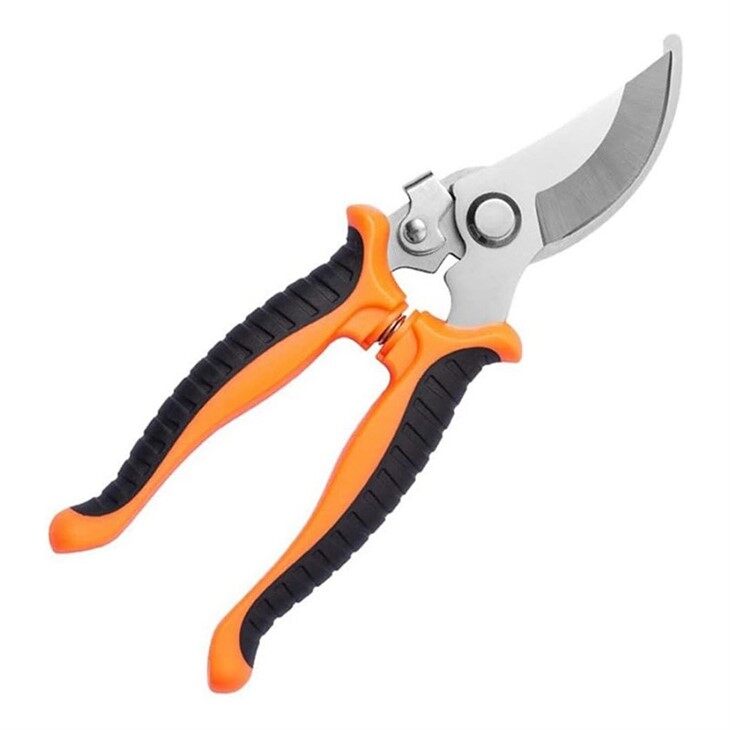
Get Ready
Before you head out to your garden, prepare your tools. There are different pruning shears for different jobs. Bypass pruners cut live wood, while anvil pruners handle dead stems. Most gardeners use bypass pruners because they make clean cuts on green wood. Before you begin pruning, make sure to sharpen, clean, and disinfect your shears.
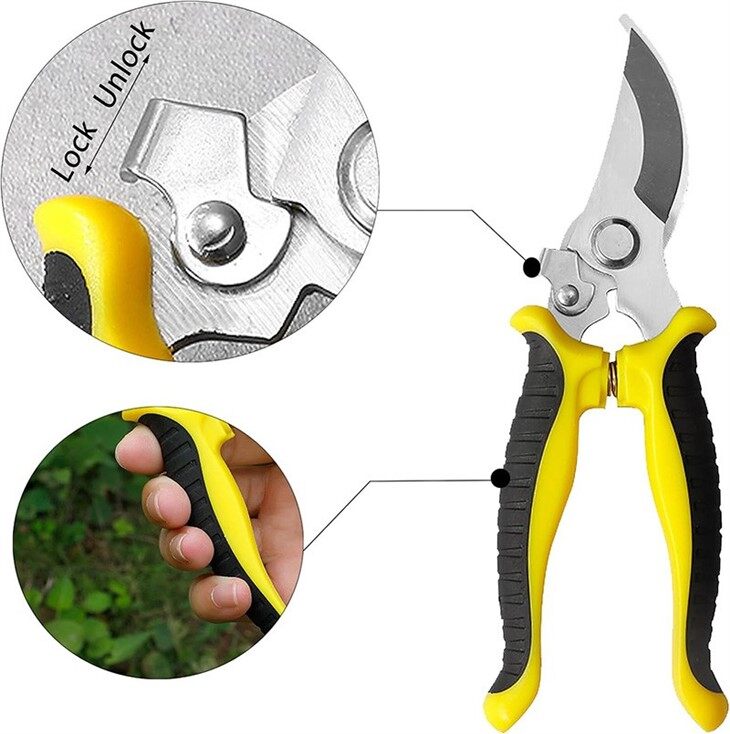
Unlock your pruner
Make sure your pruners are unlocked. Usually, there's a thumb-lock to keep them closed when not in use.
To unlock, squeeze the handles tightly together and turn the thumb lock in a slight counter-clockwise direction, releasing the handles afterwards. In rare cases, the thumb lock may be too tight to turn so you can try to loosen the screw slightly to allow it to move as desired.
Hold the handles properly
Hold your pruners properly. Holding your pruners with just your fingertips can tire your hands so make sure to grip the handles using the base of your hand and fingers.
Find the perfect cutting spot
To get the most precise cut, place the blade exactly on your desired cut location. You’ll often need to use the tool “upside down” or hold it in a different way to prevent the anvil from touching the stub that will be left on the plant. This way of cutting will leave minimal damage to the plant, which should be your goal when pruning.
Cut at the correct angle
For dead wood, cut straight through the branch. But for live wood, cut at a 45-degree angle just above a bud. This helps water drain off and prevents diseases. Cutting this way also helps divert sap away from the bud.
Cut carefully
While holding the handles comfortably, completely open your pruners, and place the branches deep into the blade. With the wood all the way in the blade, squeeze the handles to close the blades and cut through the branch in one swift motion. You may want to snip through wood like you’re cutting with scissors but this method may strain your hands, dull the pruner blade, and damage the plant.
Clean your pruners
When pruning different plants, make sure to clean your pruners in between cuts to prevent the transmission of disease from one plant to another.
Sharpen and oil before storing
Before you store your pruner, consider using a sharpening tool to keep the blade maintained. In addition to sharpening, use a mineral oil or multipurpose lubrication oil such as 3-in-1 or WD40 to wipe down the joints and the blade to prevent rust.
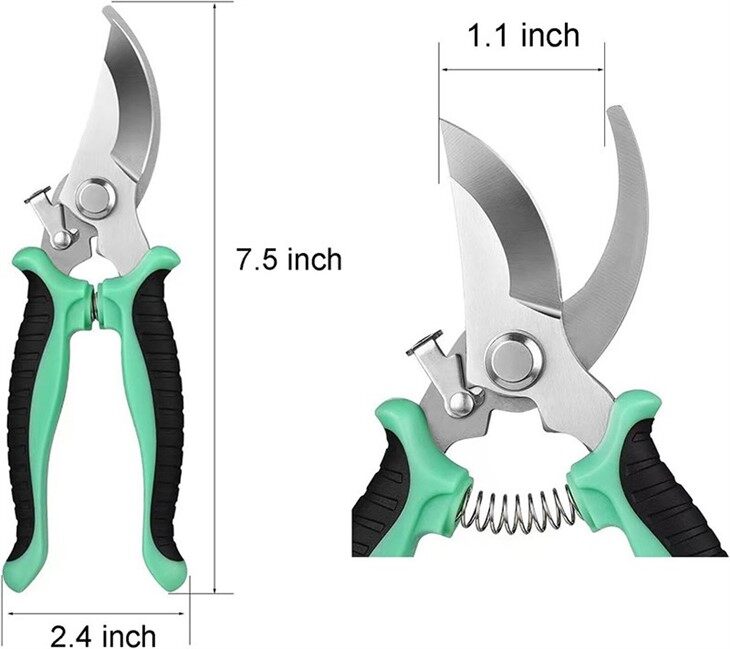
Beyond the basic functions, a pruner has several specialized uses that cater to specific gardening needs. These specialized uses make the pruner a versatile tool in any gardener's arsenal.
Harvesting Fruits and Flowers
A pruner is ideal for harvesting fruits and flowers. The precision of a pruner allows for clean cuts, which are essential for preventing damage to the plant and ensuring the longevity of the harvested produce. Whether you are picking ripe tomatoes or cutting fresh roses, a pruner is the tool of choice.
Grafting and Budding
Grafting and budding are advanced gardening techniques that require precision and care. A pruner is perfect for making the precise cuts needed for these techniques. By using a pruner, gardeners can successfully graft or bud plants, leading to the creation of new plant varieties.
FAQ
As one of the leading garden tools kit and accessaries manufacturers and suppliers in China, we warmly welcome you to wholesale high quality garden tools kit and accessaries at the best price from our factory. For customized service, contact us now.
Plastic Handle Pruner, other garden tools kit and accessaries